
Human Rights (HR)
The Human Rights (HR) Impact Topic guides companies to improve outcomes for people suffering or at risk of harm from human rights violations in connection with their operations, products, or services. It requires companies to publicly commit to respecting human rights, to identify and address their salient human rights issues, and to practice human rights due diligence by preventing, mitigating and remediating their actual and potential negative human rights impacts. It also requires companies to collaborate with their suppliers to achieve their human rights objectives.
As a company with no workers, we are required to comply with the following:
- HR 4.2: The company considers actual and potential human rights impacts in its procurement decisions.
Below we demonstrate publicly the policies we’ve implemented and the actions we’ve taken to meet these requirements.
Consideration of Potential Negative Impacts in Procurement
In compliance with HR 4.2
Up to date as of March 31, 2026
Context
Every business—no matter the size or industry— has a role to play in reducing and mitigating the potential and actual negative effects of its operations. As a small mission-driven, service-based company, we are no exception, especially when it comes to our procurement decisions. Social and environmental responsibility aren’t just trendy terms; they’re core pillars of using business as a force for good.
Procurement Materiality
We base the materiality of our procurement decisions across the following categories:
Brand Position
to grow in visibility and market exposure
Prioritization
of diverse ownership in suppliers
Conditioning
our operations to be as lean and efficient as possible at the appropriate scale
Importance
of potential negative human rights impacts
Importance
of potential negative environmental impacts
Brand Position to Grow Visibility and Market Exposure
Products and services that allow us to refine our service offerings, grow our operations, cultivate new relationships, and serve more partners. We have a very strong conviction and are fully confident in our capacity to reach more stakeholders and work toward realizing our purpose more aggressively. This category was the most material for our supplier spend in 2025, influencing procurement decisions around:
- business development initiatives, accounting for 33% of supplier spend
- professional development initiatives, accounting for 19% of supplier spend
Prioritization of Diverse Ownership in Suppliers
Products and services from suppliers that are at least 51%- owned independently by Black and Brown individuals. This category is directly linked to our Theory of Change and Purpose where we propose a long-term outcome where Black and Brown communities have the resources and backing to not only get by but get ahead.
We set a Key Performance Indicator (KPI) at 10% of supplier spend that will go to Black- and Brown-owned suppliers at minimum year over year, with a goal of 40% by the end of 2028. We met the minimum goal in 2025 at 17% of supplier spend, although more intentionality needs to be exercised to keep progressing toward our 2028 goal.
Our ability to assemble Black and Brown expert partners to work alongside us in our own service delivery will play an increasingly important role in this effort.
Conditioning Our Operations To Be as Lean and Efficient as Possible at the Appropriate Scale
Products and services that form key building blocks of our infrastructure, mainly digital services and subscriptions. We’re keen to dive more into this category over the next three years to identify alternatives and evaluate where we may reallocate resources to progress toward our KPI for diverse ownership by 2028.
These expenditures accounted for 22% of supplier spend in 2025.
Importance of Potential Negative Human Rights Impacts
We seek to minimize these impacts in our procurement decisions by prioritizing suppliers who have taken an active stance on measuring their social impact, which is usually evident through third-party certifications such as B Certification, Fair Trade, Living Wage US, etc.
In 2025, we decided to make a change in our digital marketing partner, divesting from a common industry name and reallocating our resources to EcoSend, the world’s favorite email marketing platform. As a Certified B Corporation, EcoSend is committed to holding itself accountable to continuous impact improvement and avoiding exploitative practices. In its inaugural Certification cycle in 2025, their team scored highest in the Workers impact area, particularly as related to financial security and health, wellness, and safety.
This intentionality signals to us that EcoSend genuinely cares about its people and does right by all team members, allowing them to show up to work as their best selves and extending directly to the wellbeing of their families.
Importance of Potential Negative Environmental Impacts
We seek to minimize these impacts in our procurement decisions by prioritizing suppliers local to where we operate or suppliers who have taken an active stance to do right by the planet, which is usually evident through third-party affiliations such as 1% for the Planet membership.
In 2025, we decided to make a change in our web hosting and domain partner, divesting from a common industry name and reallocating our resources to Krystal Hosting. Krystal contributes directly to the global fight against climate change by providing web hosting offerings powered by 100% renewable energy, championing services that are fair to both its customers and the planet.
But Krystal doesn’t stop there. As a 1% for the Planet business member, Krystal shoulders the responsibility of ensuring that our planet and future generations thrive by donating at least 1% of its revenue directly to vetted, environmental organizations doing the work on the ground.
Accountability
By constantly reviewing our materiality each year, we recognize that even as a small company there are plenty of ways that we can exercise agency in our procurement decisions, and we are committed to continuous improvement across our material categories. The Founder and Executive Director, representing our highest governing body, reserves the right to exercise oversight and review over any and all decisions related to procurement decisions at Enharmonic Encounters.
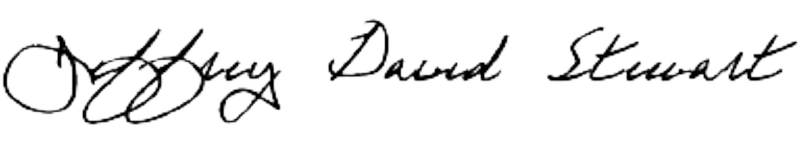
Jeffrey David Stewart | March 31, 2026
Founder and Executive Director